Loading...
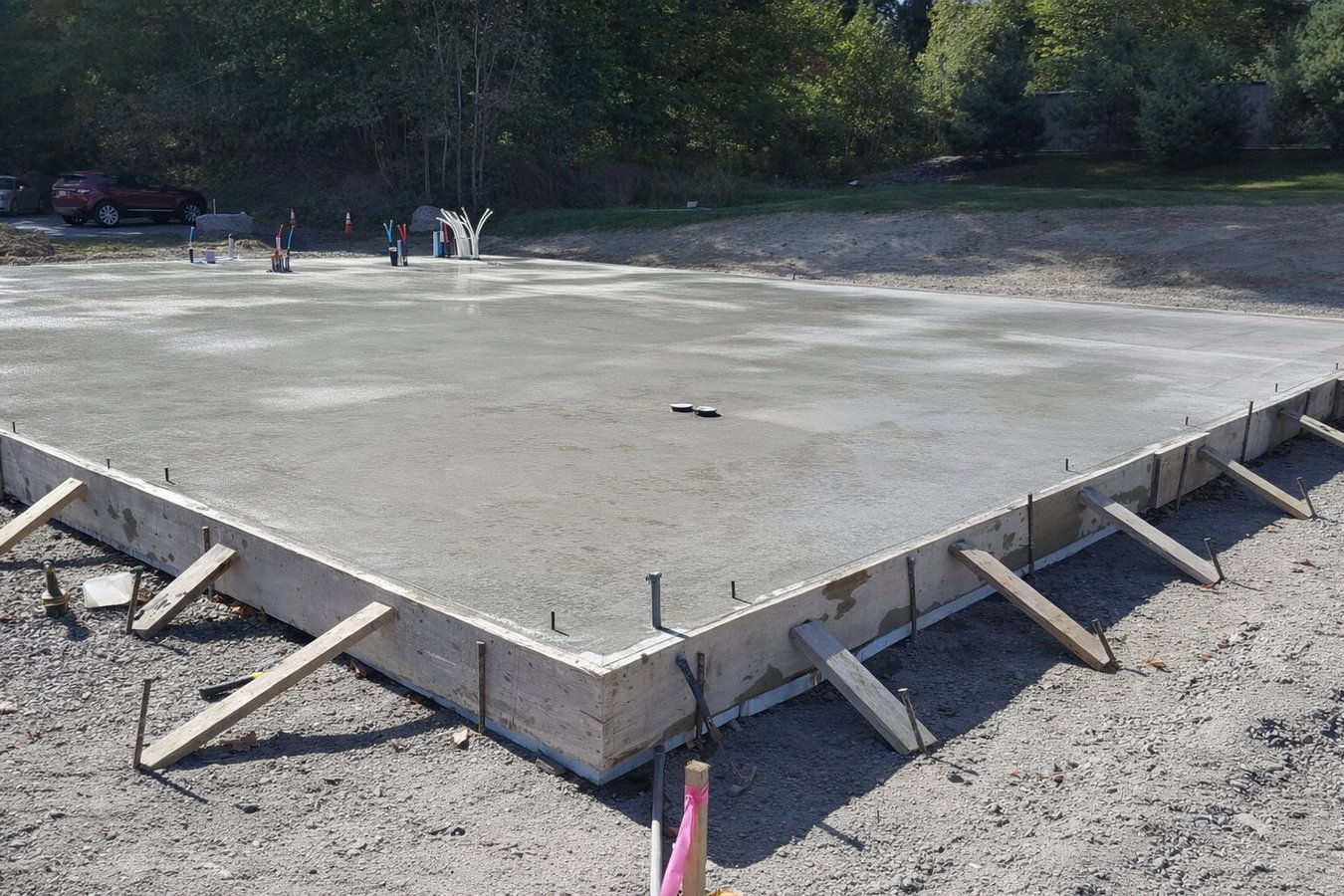
Planning a garage, addition, or new structure? We pour slab foundations in Portland that are properly prepped, frost-protected, and permitted from day one.
Planning a garage, addition, or new structure? We pour slab foundations in Portland that are properly prepped, frost-protected, and permitted from day one.
Slab foundation building in Portland, ME covers site preparation, gravel base installation, vapor barrier placement, reinforcement, and the concrete pour itself - most standard residential projects take one to two weeks from first site visit to a cured, inspected slab ready to build on.
Portland homeowners typically need a slab foundation when adding a garage, building an accessory dwelling unit, or starting a ground-floor addition. Slab foundation building in Portland is not as simple as pouring concrete - the ground preparation underneath is what determines whether the slab stays flat and dry for decades or starts cracking within a few years. Portland lots, especially in older neighborhoods like Deering and Woodfords, often have fill material or previous construction debris underground that requires careful assessment before any work begins.
If your project also requires deeper structural support - for posts, piers, or load- bearing walls - our concrete footings service covers the below-grade support that works alongside or beneath a slab.
If you are building a garage, workshop, home addition, or accessory dwelling unit, a foundation is required before framing can begin. A slab is often the most practical choice for single-story structures in Portland, and your builder or general contractor will need it confirmed before any structural work can start. Getting this scheduled early is key - Portland's outdoor concrete season runs roughly from late April through October.
Small hairline cracks are common and often harmless. But cracks wider than a quarter inch, diagonal cracks from corners, or sections that have shifted so one side is higher than the other point to movement the foundation should not have. In Portland, this often traces back to frost heave - the ground pushing up each winter and not fully settling back. Patching only delays a larger repair.
Water sitting on or collecting around a slab after rain or snowmelt means drainage is not doing its job. Portland receives close to 47 inches of precipitation a year, and spring snowmelt adds a significant additional volume. Standing water near a slab accelerates deterioration and can wash out the gravel base underneath - which leads to uneven settling and structural problems over time.
Walk across your slab and pay attention to how it feels. Spots that feel springy, sound hollow when tapped, or have a noticeable dip suggest the material underneath has settled or washed away. This is especially common in Portland neighborhoods built on older fill, and in low-lying areas near Back Cove where groundwater sits closer to the surface. These slabs often need full replacement, not patching.
We handle the full scope of residential slab foundation building throughout Portland - from initial site assessment and City of Portland permit application through excavation, gravel base installation, vapor barrier placement, steel reinforcement, the pour itself, and post-cure inspection coordination. Every slab we build includes perimeter frost protection sized to Maine's roughly 48-inch frost depth, so the ground beneath your foundation does not freeze and move the slab in future winters. When your project also requires structural supports below the slab, our foundation installation service covers deeper excavation and wall construction for full basement and crawl-space scenarios.
We also handle slab replacement on older Portland properties where the original pour is deteriorated beyond repair. For neighborhoods with known groundwater concerns - near Back Cove, the Eastern Promenade, or low-lying areas of South Portland - we assess drainage conditions before committing to a design, because the drainage and moisture protection built into the slab is more demanding in those zones. No two Portland lots are identical, and our estimates reflect what your specific site actually requires.
Suits homeowners building a new garage, addition, or accessory structure who need a frost-protected, permitted slab as the starting point before framing.
Suits Portland homeowners with a deteriorated or heaved existing slab that patching can no longer fix, requiring full demolition, base re-preparation, and a fresh pour.
Suits properties near Back Cove, the Eastern Promenade, or other low-lying Portland areas where a shallow water table requires additional drainage prep before the slab can be poured.
Suits older Portland homes with bare-dirt or crumbling garage or basement floors that need a properly poured slab to make the space usable and dry.
Portland sits in a climate zone where the ground can freeze to a depth of roughly 48 inches in a hard winter. Any slab foundation that is not built with that frost depth in mind will heave, crack, or shift as the ground freezes and thaws each year. Beyond frost, Portland averages nearly 47 inches of precipitation annually - including significant spring snowmelt - which means moisture management under the slab is not optional. These two factors together mean that slab foundation building in Portland is a technically different job than it is in warmer or drier parts of the country, and contractors without local experience routinely underestimate what it requires. Portland's Inspections Division also requires permits and site inspections for all new foundation work, adding a process step that needs to be built into every project timeline.
Portland's older neighborhoods present their own layer of complexity. A large share of the city's housing stock was built before World War II, which means many lots have been disturbed, filled, or built over multiple times. The ground conditions in Woodfords, Deering, and comparable neighborhoods can be unpredictable - older fill material and buried debris are common finds during excavation. Homeowners in areas like South Portland and Westbrook face similar soil variability, and a proper site assessment before any slab project begins is not optional - it is how an accurate estimate gets built.
We reply within one business day. Because Portland lot conditions vary significantly, we schedule a site visit before giving any firm numbers - a phone estimate for a slab in an older neighborhood is not worth much without seeing what is actually on and under the ground.
We handle the City of Portland building permit application on your behalf - typically approved within a few business days to a week. This step is built into the project timeline so it does not add surprise delays when you are ready to start.
The crew excavates, removes any problematic material, and installs a compacted gravel base and vapor barrier. This typically takes one to two days and is where most of the heavy equipment work happens - the foundation under the foundation that most homeowners never see.
We set forms, place reinforcement, and pour - a standard residential slab is typically finished in a single day. The concrete firms up within 24 to 48 hours and reaches full strength over the following weeks. We coordinate the city inspection and hand you a copy of the closed permit at completion.
Free on-site estimate. We handle the permit. No surprise costs.
(207) 245-9716Every slab we pour includes perimeter frost protection sized to Portland's actual frost depth - not a generic national spec. A slab that is not protected to this depth will heave and crack through Maine winters. We build this into the design from the start, not as an add-on.
We handle the permit application with Portland's Inspections Division and coordinate the required site inspections so you do not have to. Every slab we build is documented and on record - which protects your investment and makes your home easier to sell or refinance later.
Portland's lots - particularly in Deering, Woodfords, and neighborhoods near Back Cove - can hide old fill, buried debris, or high groundwater close to the surface. We assess the site before writing any estimate, so the number you agree to reflects what the ground actually requires.
Maine requires concrete contractors to be licensed through the state. You can verify any contractor's license through the Maine DPFR. Hiring a licensed contractor means you have recourse if something goes wrong, and that the work carries proper insurance coverage.
We have poured slabs on Portland properties with tight urban lots, high water tables, and challenging older fill - the kind of conditions that catch out contractors without genuine local experience. That site knowledge translates directly into fewer surprises and a slab that holds up the way it should through Maine winters.
For projects requiring a full basement or crawl space foundation, foundation installation covers deeper excavation, wall forming, and waterproofing suited to larger structures.
Learn moreFootings are the below-grade structural base that supports walls, posts, and piers - often installed as part of or alongside slab work.
Learn morePortland's concrete season fills up fast - reaching out now locks in your start date before the best summer slots are gone.