
Loading...
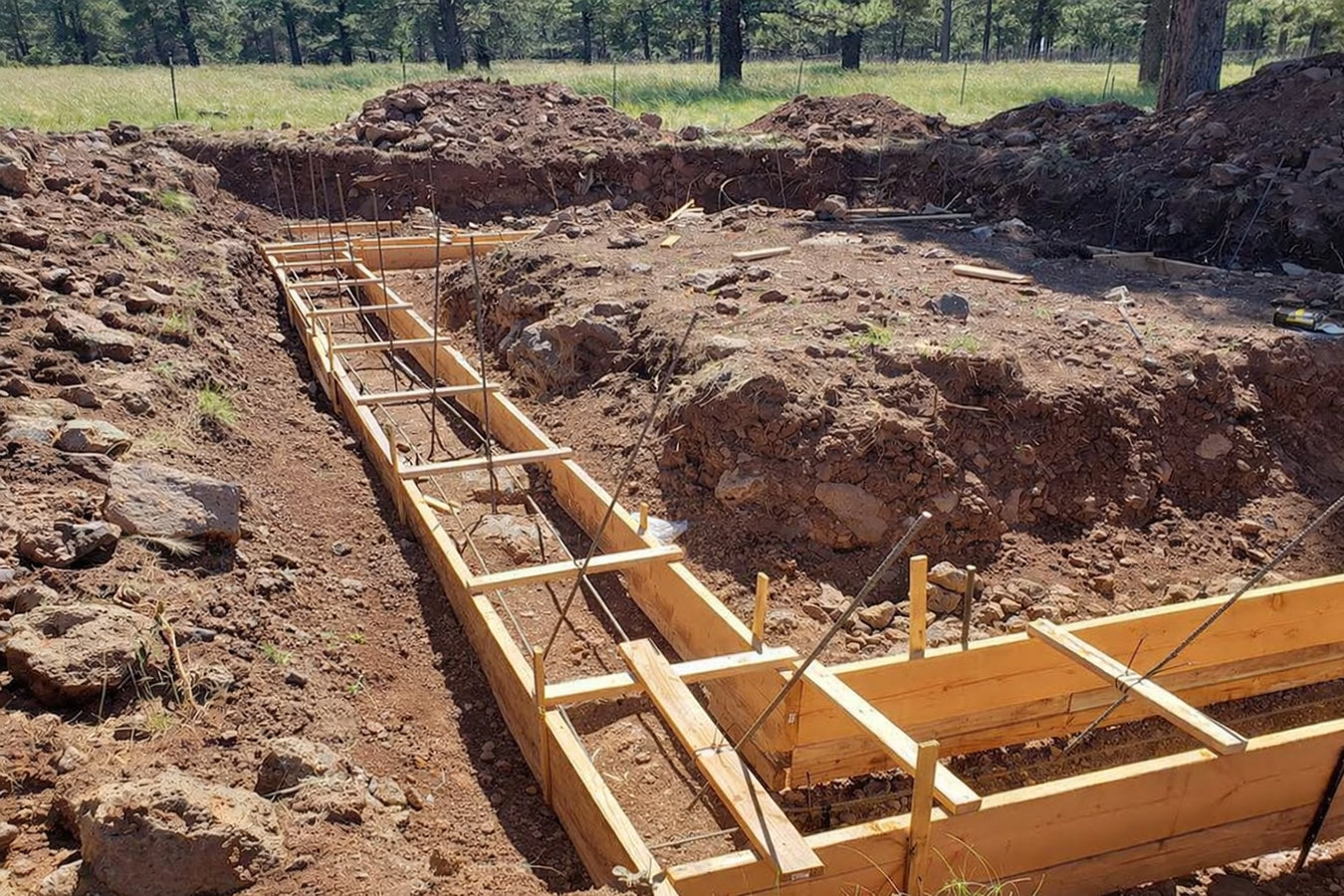
Deck posts heaving after winter or planning an addition that needs a solid base? We pour concrete footings in Portland to the 48-inch frost-depth requirement with permits and city inspection handled from day one.
Deck posts heaving after winter or planning an addition that needs a solid base? We pour concrete footings in Portland to the 48-inch frost-depth requirement with permits and city inspection handled from day one.
Concrete footings in Portland, ME are the wide, flat bases poured underground that hold up everything above them - foundation walls, deck posts, porch columns, and additions - and Maine building code requires them to be installed at least 48 inches below grade to stay below the frost line; most residential footing projects take one to two days to dig and pour plus a three to seven day curing period before framing can begin.
Think of a footing like the bottom of a wide glass: without that broad base, the whole structure tips or sinks. Concrete footings in Portland are the starting point for decks, additions, garages, and new foundation systems - and they are where the project either gets done right or sets up problems that compound for decades. The 48-inch depth requirement is not optional here, and it is the main reason footing work in Maine costs more than in warmer states: there is simply more excavation in every project.
If your project involves a full slab on top of the footings, our slab foundation building service covers the next phase once the footings have cured and passed inspection.
If your deck has shifted, posts are no longer plumb, or boards have buckled after a hard Maine winter, frost heave is the likely cause. Posts or piers not set deep enough let freezing ground push them upward each year. The fix is properly installed footings at the correct depth - anything shallower will repeat the same cycle every spring.
Cracks wider than the thickness of a dime, running diagonally from door or window corners, or growing noticeably over a season often point to a footing that has settled unevenly or was undersized. A concrete contractor can assess whether the footing is the source of the cracking or whether something else is at play - do not assume it is cosmetic.
Any new structure attached to or near your home needs properly installed footings before framing can begin - this is not optional in Portland, and the city will require a permit and inspection. If you are in the planning stages of a project like this, getting a footing contractor involved early helps you understand the full scope and cost before committing to a design.
Portland neighborhoods like the West End, Munjoy Hill, and Deering have many homes on sloped terrain where water naturally runs toward the foundation. Over time, water movement and soil shifting on these lots can undermine footings, especially in older homes. Gaps forming between the foundation and soil, or doors and windows sticking where they did not before, are worth investigating before the movement goes further.
We install concrete footings for decks, home additions, garages, porch columns, retaining wall bases, and new foundation systems throughout Portland and the surrounding area. Every project starts with a site assessment that looks at soil conditions, equipment access, ledge risk, and the load the footing needs to carry - because all of those factors affect depth, width, and the reinforcing steel required. We pull the City of Portland building permit, schedule the required pre-pour inspection with the Building Division, and do not pour until the inspector has signed off on depth and size. When the project calls for a full slab or foundation system on top of the footings, our foundation raising service handles the elevation correction phase if an existing structure has already settled and needs to be brought back into level before new footings are added.
Portland homes built before 1950 - common in Munjoy Hill, the West End, and Woodfords - often have original footings that were shallower and made from materials that have degraded. We assess whether existing footings are adequate for the load they are being asked to carry, and we can add supplemental footings alongside originals rather than requiring full replacement when the situation allows. We also discuss ledge risk honestly before digging starts - Portland sits on granite bedrock that can be close to the surface in many neighborhoods, and a contractor who does not raise this before quoting is leaving out a potentially significant cost.
Suited for homeowners adding or replacing a deck or porch where existing posts have heaved or were never set to the proper frost depth.
Suited for homeowners building a new addition or detached garage where the city permit process requires verified frost-depth installation before framing begins.
Suited for new construction or foundation replacement projects where the continuous footing is the first structural element poured before walls and slab work begin.
Suited for Portland homes built before 1950 where original footings are inadequate for an addition or renovation load but do not require full replacement of the existing system.
Maine building code sets the footing depth at 48 inches below grade - among the deepest requirements in the continental United States - because Portland winters regularly freeze the ground well below the surface. If a footing sits above that line, frost heave pushes it upward each year and the structure above it moves with it: cracks form, doors stick, decks tilt. Portland also sits on a granite bedrock shelf, and in many neighborhoods - especially on the peninsula and in the East End - that rock can be just a foot or two below the surface. Hitting ledge during excavation requires drilling or a design adjustment, both of which add cost and time. A contractor who has worked in Portland knows which neighborhoods carry higher ledge risk and discusses it with you before work begins rather than presenting it as a change order after digging starts.
Homeowners in South Portland face the same frost depth and ledge risks as Portland proper, and the short construction season - roughly late April through October - means scheduling matters as much as the work itself. Homeowners in Brunswick and surrounding Cumberland County towns also deal with Portland-level frost depths and older housing stock where underground surprises are more common than on newer suburban lots. Getting a site visit before spring arrives gives you the best chance of starting on schedule.
We respond within one business day and schedule a site visit before giving you any number. Slope, soil conditions, ledge risk, and equipment access all affect the final cost - none of that can be assessed over the phone. The written estimate includes permit fees, excavation, concrete, and any steel reinforcement as a complete scope.
We pull the building permit from Portland's Building Division before any digging starts. The permit triggers an inspection before the pour, which means a city inspector verifies depth and size while the hole is still open. That independent check is your best protection against shortcuts.
The crew digs to at least 48 inches - sometimes more depending on the project - and places any steel reinforcing bars before calling for the inspection. If ledge appears, we stop, discuss the options with you, and agree on a path forward before any additional work or cost is incurred.
Once the inspector signs off, we pour the concrete, level and finish it, and cover it if temperatures call for protection during curing. Plan for three to seven days before any load is placed on the footing, and up to 28 days for full strength - your project schedule should account for this before framing begins.
Free site visit, written estimate, no obligation. We handle the Portland permit and schedule the inspection so your project can start on time.
(207) 245-9716Maine requires footings at 48 inches below grade - deeper than most states - and Portland's Building Division inspects before the pour. We pull the permit on every structural footing project and welcome the inspection, because the city check is the homeowner's best protection against work that cuts corners on depth. Unpermitted footing work creates problems when you sell or make an insurance claim.
Portland sits on a granite bedrock shelf, and in many peninsula and East End neighborhoods that rock is just a foot or two down. We assess ledge risk during the site visit and discuss it with you before a quote is signed, so if rock appears during excavation, you already have a clear plan and a clear price for how it gets handled.
A large share of Portland homes were built before 1950, and what is underground on those properties is often a surprise - old pipes, previous concrete, disturbed fill, or original footings that were never deep enough. We have worked on Portland's peninsula and older neighborhoods long enough to know what to look for and how to handle it without derailing the project or hitting you with unexpected charges.
We do not quote footing projects over the phone. Soil, slope, access, and the distance to ledge all affect the final price in ways a conversation cannot account for. The written estimate you get after our site visit is based on your actual property - so it is a number you can rely on and compare fairly. For more on footing installation standards, the American Concrete Institute publishes guidance on mix design, reinforcement, and curing for residential structural concrete.
Every footing we pour in Portland goes in at the right depth, with the required permit and inspection, after a site assessment that accounts for the specific conditions on your property. That is the standard that keeps structures stable through Portland winters for decades rather than a few years.
When a structure has settled because footings moved or failed, foundation raising corrects the elevation before further structural work can proceed.
Learn moreSlab foundations sit on top of a properly prepared footing system - when a full slab is needed for a garage, workshop, or addition, slab building is the next phase.
Learn morePortland's construction season fills fast and the frost-free window is short - reaching out before spring means your project starts on time rather than waiting for the next available slot.