Loading...
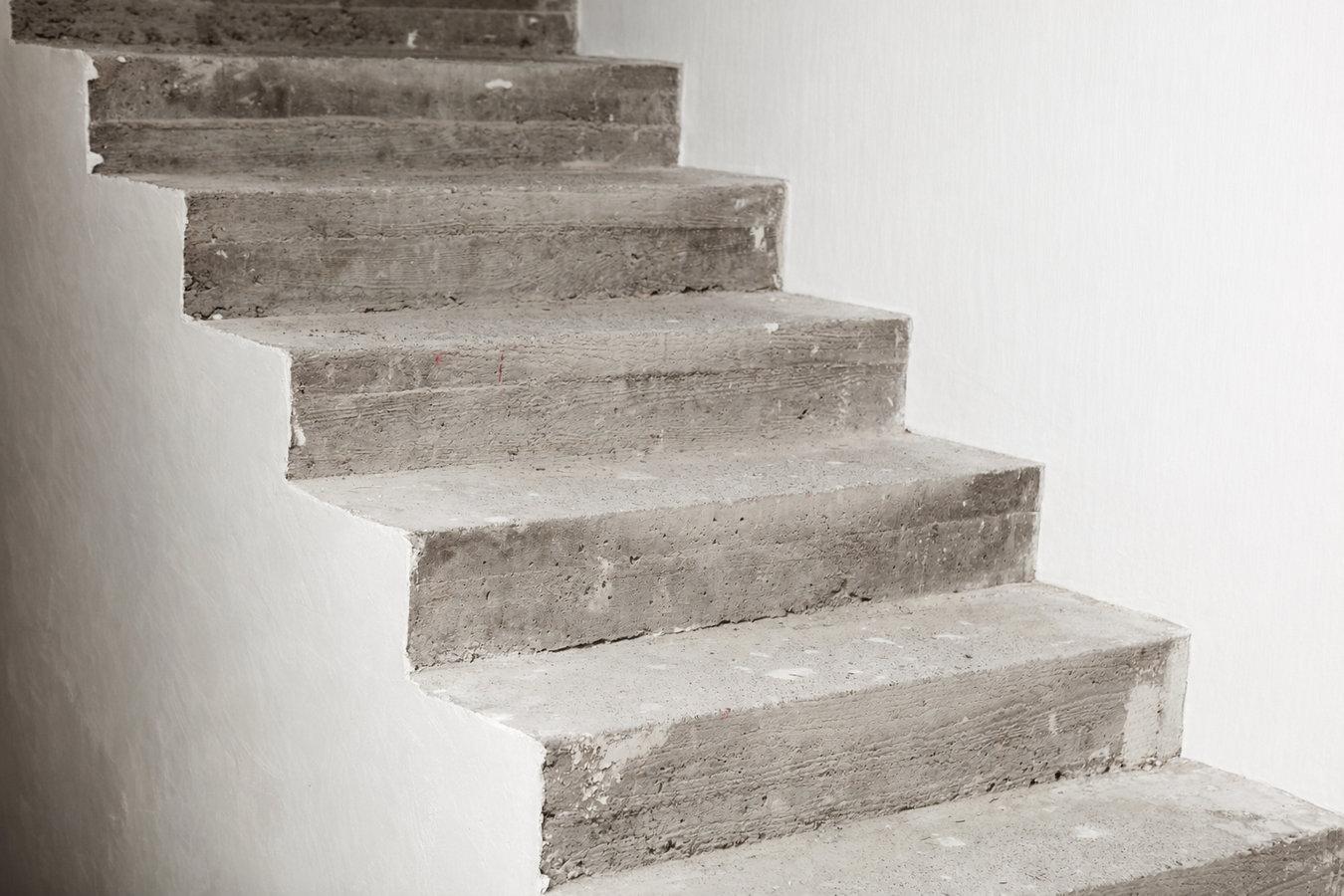
Crumbling front steps? Settled, tilted, or cracked entry stairs? We build new concrete steps for Portland homes that hold up through freeze-thaw winters and stay safe all year round.
Crumbling front steps? Settled, tilted, or cracked entry stairs? We build new concrete steps for Portland homes that hold up through freeze-thaw winters and stay safe all year round.
Concrete steps construction in Portland, ME covers the full process of removing old entry steps, preparing a stable gravel base, forming and pouring new steps, and finishing the surface for safe footing - most projects take one to two days of active work, with a curing period before the steps are back in regular use.
Portland homeowners typically reach us when their front or side steps have cracked beyond what patching can fix, when frost heave has tilted or separated steps from the foundation, or when an older home still has its original entry steps from decades ago. Concrete steps construction in Portland starts with the base - if the ground underneath is not properly prepared with compacted gravel, the steps will settle and crack again regardless of how good the concrete is. Getting that right is the difference between steps that last 30 years and ones that need replacing in ten.
If you are replacing steps and also want to upgrade the walkway leading to your door, our concrete sidewalk building service handles the connecting path as part of the same project or separately.
If you can see chunks missing from the corners or edges, or if the surface is flaking off in layers, freeze-thaw damage has been working on your steps for years. This kind of deterioration accelerates once it starts - a small chip this winter becomes a large broken edge by next spring. It is worth having a contractor assess it before someone trips or the damage spreads to the foundation connection.
If your steps look like they have sunk on one side, or if there is a visible gap between the steps and your foundation, the base beneath them has likely settled or washed out. This is a safety hazard - uneven steps are a leading cause of falls at home. In Portland, this kind of settling is often caused by frost heave, where the ground freezes and pushes structures upward, then drops them unevenly when it thaws.
Water that collects at the bottom of your steps or along the sides after rain is a sign drainage around the steps is not working properly. Over time, that standing water soaks into the ground, freezes, and pushes the steps out of position. If you see this pattern after a rainstorm, address it before the next winter makes it significantly worse.
In Portland's older neighborhoods - the West End, Munjoy Hill, Deering - it is common to find original concrete steps that have been patched and re-patched over the decades. Patching works when the underlying structure is sound, but once freeze-thaw damage has compromised the base, patching is just delaying the inevitable. If your home was built before 1985 and the steps have never been fully replaced, a professional evaluation is a smart call.
We build new concrete steps and replace existing ones at front doors, side entrances, decks, and garage entries throughout Portland. Every project includes demolition and removal of old steps if needed, excavation to stable soil, and installation of a compacted gravel base before any concrete is poured. The base is what keeps steps level and crack-free through Portland's freeze-thaw winters - skipping or shortcutting this step is the most common reason steps fail early. We form each set of steps to consistent rise-and-run dimensions so every step feels the same underfoot, and we finish surfaces with a broom texture that grips in wet and icy conditions. If your project also involves a larger ground-level concrete element like a slab foundation, we handle both as part of one coordinated scope.
We pull City of Portland permits for all structural step work that requires them, manage the inspection process, and walk you through care and maintenance before closing out the job. For homeowners on older Portland streets where access is tight, we plan the project carefully to minimize disruption to your entrance and your neighbors. We also offer handrail installation alongside new steps - important for households with older adults or anyone who wants a secure grip on icy Portland mornings. For broader walkway or concrete sidewalk work that connects to your new steps, that can be scoped together to avoid disrupting the entrance twice.
Suits homeowners adding steps where none exist or building a new entrance - complete design, forming, and pour from grade up.
Suits homeowners with steps that are cracked, tilted, or structurally compromised - full removal of old steps and a new pour done right.
Suits homeowners who want a flat landing area at the bottom or top of the steps - adds safety and improves the look of the entire entrance.
Suits households with older adults, young children, or anyone who wants secure footing on icy Portland mornings - metal handrail set in the pour.
Portland's housing stock is older than most cities its size - a large share of residential homes were built before 1960, and many neighborhoods like the West End and Munjoy Hill have homes dating back to the 1880s and 1890s. Those homes often have foundations made from older materials, and connecting new concrete steps to a century-old foundation requires a different approach than tying into modern poured concrete. Getting that connection watertight and structurally sound is not something a contractor unfamiliar with Portland's housing stock will automatically know how to do. Homeowners in South Portland with older homes face similar conditions, and we bring the same attention to foundation compatibility and base preparation to those projects.
Portland also averages more than 40 freeze-thaw cycles per winter. That repeated cycle of freezing and thawing is the reason steps crack, heave, and separate from foundations faster here than in warmer climates. Using an air-entrained concrete mix - specifically formulated to resist freeze-thaw damage - and properly preparing the gravel base beneath the steps are the two most important factors in how long your steps last. Portland's building permit and inspection process adds a professional check on this work, which is one more reason to use a contractor who handles permits as a matter of course. Homeowners in Brunswick and other nearby communities with comparable older housing stock see the same freeze-thaw challenges and benefit from the same approach.
Call or message us and we will schedule a visit - usually within a few days. We reply within one business day. The visit takes 20 to 30 minutes: we measure the space, assess existing conditions, and give you a written quote before we leave or within a day or two.
For most new or replacement concrete steps in Portland, we apply for the required city building permit before any work begins. This typically takes a few business days to two weeks. You do not need to contact the city - we handle the paperwork and will confirm your start date once the permit is approved.
On day one, we remove old steps if there are any, dig out unstable soil, and pack in a compacted gravel base. Then we build wooden forms in the shape of your steps, pour the concrete, smooth it, and apply a broom finish for grip. The pour itself usually takes a few hours and the steps look finished by end of day.
Stay off the steps for 24 to 48 hours after the pour - plan to use a different entrance during this window. Once cured, the city inspector signs off on the permitted work and we walk you through the finished steps, including care guidance and when to apply a sealer for added winter protection.
Free on-site estimate. Permits handled. No commitment required.
(207) 245-9716Portland sees more than 40 freeze-thaw cycles every winter. We use air-entrained concrete mixes that are formulated specifically to resist that repeated expansion and contraction - the primary reason steps crack and heave in Maine's climate. The American Concrete Institute recommends air-entrained mixes for all exterior concrete in northern climates, and we follow that guidance on every pour.
A large share of Portland homes were built before 1960, many with fieldstone or brick foundations. Connecting new concrete steps to an older foundation requires specific knowledge of how those materials behave and where the failure points are. We have worked on steps in the West End, Munjoy Hill, and Deering - Portland's most historic neighborhoods - and know what to look for before we pour a single yard of concrete.
Portland requires permits for structural exterior work, and skipping them can create real problems when you sell your home or need to file an insurance claim. We pull every required permit, manage the inspection process, and make sure you walk away with a permitted, inspected job on the record. You never need to contact the building division.
Maine requires contractors performing residential construction above a certain threshold to be registered with the state. We are registered with the Maine Department of Professional and Financial Regulation and carry liability insurance and workers' compensation on every project. Verifying this before you hire anyone is a five-minute step that matters.
Portland's older homes and hard winters demand steps built for the specific conditions here - not a generic concrete pour. Every job we do is permitted, properly based, and finished for safe footing year-round, including through the icy months that make your front entrance the most hazardous spot on your property.
If your project involves more than entry steps and requires a new structural base for a building or addition, slab foundation work addresses the ground-up requirements.
Learn moreNew front steps often connect to a walkway - concrete sidewalk construction covers the path from the street or driveway to your door.
Learn moreCrumbling or tilted steps are a safety risk every time temperatures drop - call now and we will have your new steps planned and scheduled before the season closes.